
Nothing at All by Olivia Tapiero, translated by Kit Schluter
Nothing at All, Olivia Tapiero’s collection of vignettes exploring loss, illness, desire, and pain was translated from French by Kit Schluter for this edition.

Nothing at All, Olivia Tapiero’s collection of vignettes exploring loss, illness, desire, and pain was translated from French by Kit Schluter for this edition.

Within a faith tradition that sees only two genders, and from the purview of a small northern community, what can a young person know about themselves and their possibilities?

Whose love story is this? In English, `you’ is many-gendered, can denote singularity, plurality, a finger-pointed other, a reflective self.

The title of Danielle Deveraux’s book The Chrome Chair comes from a quote the poet heard at the Newfoundland and Labrador Historical Society Symposium in 2003:
“We were promised a seat at the table of nations: what we got was a chrome chair” (5).

A work of historical fiction, the setting is a place Hussain has imagined where matriarchy plays an important role.

Hollay Ghadery is a writer who will not waste your time. By which I mean both that she says what she has to say succinctly, and that her observations are inevitably worthwhile.

From mentions in major publications to impressive stacks in local and national bookstores, Rebecca Godfrey’s Peggy is everywhere — and with good reason.

In 1979, in the Hydrostone neighbourhood of Halifax, June’s son Gerald goes missing.

With a title like Dry Your Tears to Perfect Your Aim, I’m not even sure I need to review this one. Isn’t it marvellous?

A piece of autofiction, a form of fictionalized autobiography, Jowita Bydlowska breaks down and pieces back together the darkness and long term ripples of sexual abuse, complicated parenting styles and forgiveness along with revenge.

A dark, comic, strangely endearing novel, Hair for Men by Michelle Winters is a bizarrely endearing novel, despite its heavy storyline.

Bird Suit’s fictional town of Port Peter could be any number of small towns on a lake, overrun with summer tourists buying ice cream and cheap souvenirs on the boardwalk, filling up the local pubs and motels, knocking up the local girls – before disappearing in September. There are, however, two things that make Port Peter special: its perfect peaches and its Birds. “The women of the town tell one another about the Birds in secret… When a Port Peter girl gets pregnant by a tourist boy, a woman in her life gives her all the information she needs to know.”

While unfortunately we already know what it looks like when those who aren’t men are denied rights, and what it looks like when hard-won rights are being eroded, Autokrator takes the chilling thought experiment in a more extreme direction: what if women had no rights at all?

The Great War is over, and the summer of 1919 should be one of celebration, but Constance Haverhill has lost her mother to the Spanish influenza. Constance also lost the job managing Lord Mercer’s country estate, which she held all through the war, to a man.
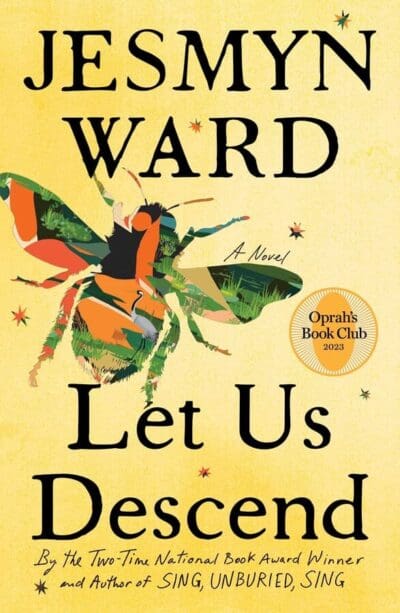
It is here that her mother digs up two long spears hidden amongst the roots of a great tree. Annis learns that one of the spears belonged to her grandmother, Mama Aza, who had been a woman warrior married to a king.
© 2025| THE Miramichi Reader

