
There’s Always More to Say by Natalie Southworth
With her debut collection There’s Always More to Say, Natalie Southworth demonstrates that she not only understands the skills necessary to write powerful short stories, she has no shortage of them.

With her debut collection There’s Always More to Say, Natalie Southworth demonstrates that she not only understands the skills necessary to write powerful short stories, she has no shortage of them.

The novel is set in 2015-2016, a time when Israeli forces began restricting access to Muslim holy sites in Jerusalem. Aziz, a young man at odds with his father, witnesses, alongside his friend Mustafa, the murder of their friend Hassan at the hands of an Israeli soldier.

Life is wonderful and challenging, complicated and hard. That much you might easily take away from the title of Lynda Williams’s debut short story collection, The Beauty and the Hell of It.

The Northern, which in a sense is a bildungsroman, serves also as an examination of contemporary masculinity.

Okot Bitek’s writing is unapologetic as she reckons with the legacy of the Lord’s Resistance Army: a militant group that abducted tens of thousands of children to serve in its ranks between the late 1990s and early 2000s.

In her self-portrait from a chronological distance, Percy celebrates a semi-misspent youth—all of its fiery enthusiasms and blind alleys, its dramas and earnestness, its lessons learned, misunderstandings, messiness, unbridled pleasures, and excesses. And, yes, humiliations.

There’s palpable tension in the spare opening pages of Yellow Barks Spider, a debut novella by Vancouver-based Saskatchewan transplant Harman Burns. Even before the story begins, a dedication—“for ██████ wherever you are” —draws any curious eye. A technique Burns revisits later, redaction—with its there/not there visibility—prompts inevitable questions: what’s the masked name and the story behind …

Political poetry is crucial to the Palestinian literary tradition, embodied perhaps most famously by the poet and author Mahmoud Darwish (1941-2008), who was displaced as a child during the Nakba. This rich literary tradition also includes Ghassan Kanafani (1936-1972), displaced to Lebanon in 1948 and assassinated by the Mossad at the age of 36. Many readers are familiar with Refaat Alareer, the poet and literature professor whose poem “If I Must Die” was circulated widely after his assassination in 2023. His colleague and close friend, Mosab Abu Toha, enters this impressive lineage with his debut collection, Things You May Find Hidden in My Ear.

The five sections of selections that make up her debut explore the connections we make along our journey and how they continue to affect us long after they become memories.

Chimwemwe Undi’s first poetry collection, Scientific Marvel, examines common experiences and elevates them with a musical quality that moves.

Rabbit, Rabbit, Rabbit is a story centered around Millicent, a shy, 24-year-old reporter who moves to Whitehorse after graduating from college, where she focused more on poetry than journalism. Yet off to journalism she goes, to work at the Golden Nugget, a failing daily newspaper with three staff.

There is a lyricism to Kit Dobson’s prose in We Are Already Ghosts, a way of revealing detail that is at once both elegant and calculated in its precision, distinguishing the novel by its tempered restraint.

Like the bright, sharp images we attribute to the ubiquitous social media influencers, Deepa Rajagopalan’s first book is a beautiful series of snapshots that allude to colourful lives.
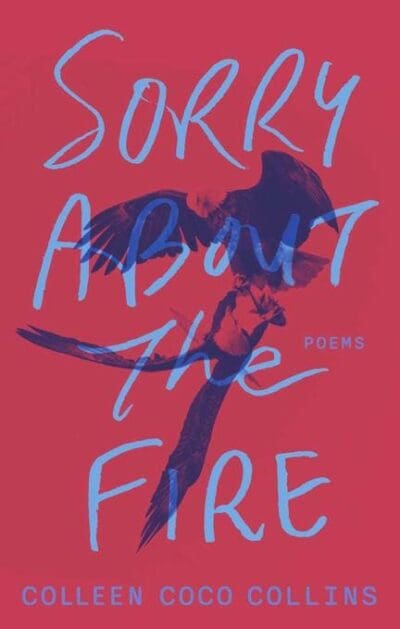
Colleen Coco Collins features an alphabetical array in her debut collection of poetry: Sorry About the Fire, a singeing apologia of inventive sound and sensuousness.

The debut novel Nothing in Truth Can Harm Us from author Colleen René is a wonderful work in balancing tension and intrigue with the complexity of compassion.
© 2025| THE Miramichi Reader

